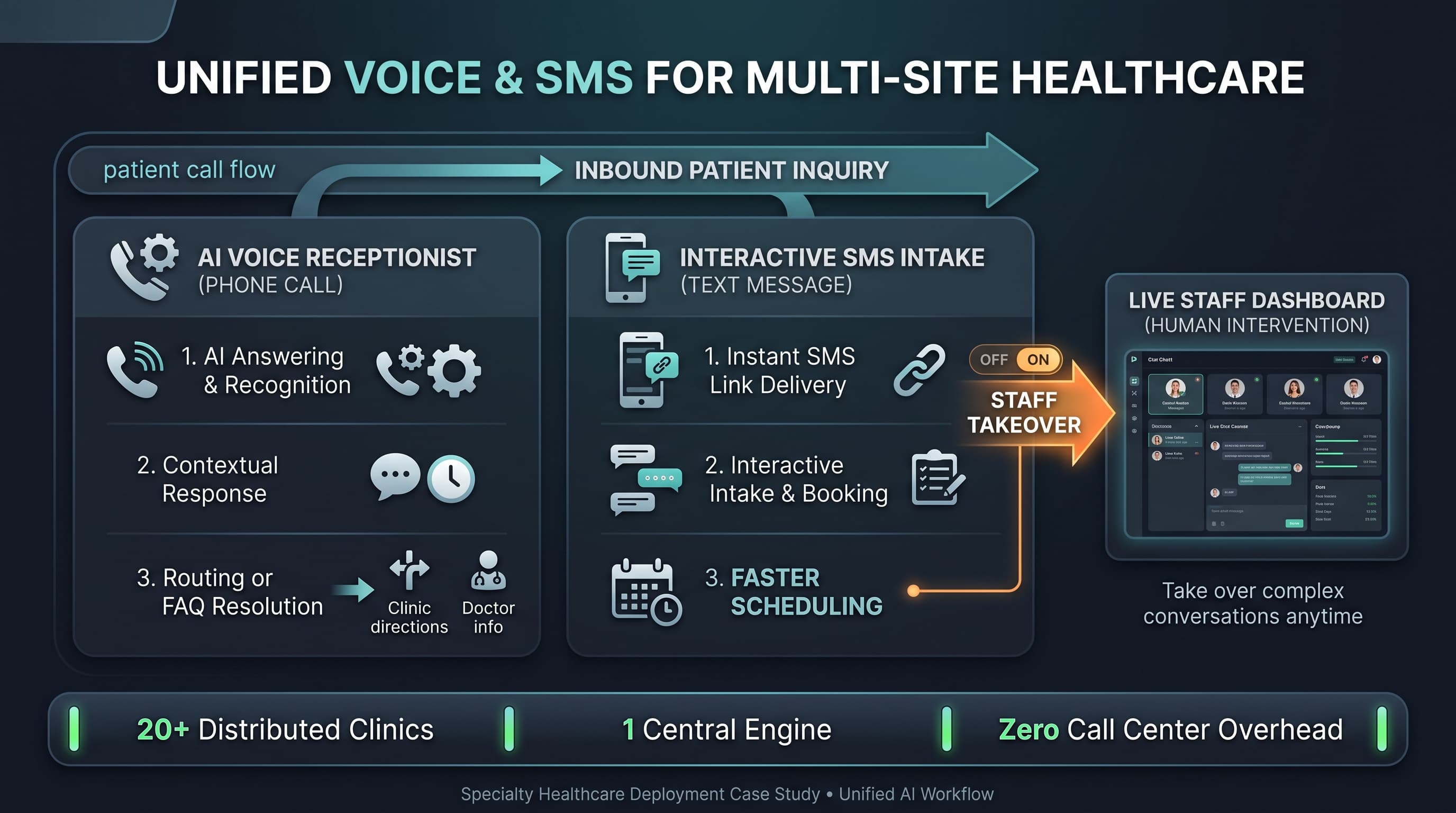
A healthcare AI phone system should not begin as a generic front-desk replacement project. Patient access teams get better results when they define the conversations that already consume call volume, decide what information must be captured, and then automate those flows with clear escalation boundaries. That keeps the experience reliable for patients and operationally useful for staff.
The mistake many organizations make is trying to automate every inbound call on day one. That usually produces vague handoffs, inconsistent routing, and frustrated staff who now have to clean up a different kind of queue. The better approach is narrower. Start with call flows that are repetitive, rules-based, and expensive to keep handling manually. Then add nuance only after the first workflows are stable.
Why healthcare AI phone system rollouts usually stall
Most stalled projects do not fail because the technology cannot answer a question. They fail because the operating model is unclear. A patient access team may say it wants scheduling automation, but behind that request are questions about insurance verification, referral requirements, preferred providers, callback windows, urgent symptoms, and language preference. If the workflow does not specify what to collect and when to transfer, the call still lands on staff with too many gaps.
Another common problem is measuring success too broadly. If a team evaluates a new system by asking whether it reduced total calls immediately, it can miss the real early win: fewer avoidable interruptions and cleaner context when staff do step in. That is why the operational design matters as much as the conversational design. A system that gathers accurate intent, names the reason for escalation, and packages the next step clearly can create leverage even before deflection numbers move dramatically.
Healthcare teams also have to protect trust. Patients calling with questions about appointments, referrals, refill requests, or post-visit follow-up do not want to feel pushed into a maze. The workflow must sound calm, ask only necessary questions, and hand off quickly when urgency or ambiguity appears. The article on escalation design matters here because operational credibility comes from how the system exits the call, not just how it opens it.
Healthcare AI phone system workflows patient access teams should automate first
The first batch should focus on calls that are frequent, bounded, and straightforward to categorize. These are the workflows where a healthcare AI phone system can reduce hold-time pressure without creating new clinical or administrative ambiguity.
Appointment scheduling and rescheduling. Capture visit type, provider preference, preferred time windows, and whether the patient needs a callback instead of immediate booking.
New patient intake. Collect baseline contact details, service interest, referral status, and any required intake notes before a coordinator follows up.
Referral follow-up. Confirm whether the patient has a referring provider, which specialty they need, and what step is blocking progress.
Prescription refill routing. Separate routine refill requests from higher-friction medication questions and direct them to the right staff queue.
Billing and insurance questions. Classify whether the caller needs coverage clarification, statement help, or payment support rather than sending everything to the same line.
Status checks. Handle common questions about appointment confirmations, callback status, and paperwork receipt without forcing staff to repeat the same updates all day.
After-hours request capture. Gather the reason for the call, the urgency signal, and the best callback information before routing to the proper on-call path.
Notice that none of these flows require the system to behave like a clinician. They require it to identify intent, collect a structured minimum dataset, and move the conversation to the right next step. That is why patient access teams often see the earliest gains on the administrative edge of care delivery rather than in highly complex conversations.
These call flows also create a reusable template. Once the team knows how to define required fields, allowed outcomes, and escalation triggers for one service line, it can adapt the same pattern across additional specialties or locations. Operationally, that is more valuable than launching a wide but shallow experience that everyone has to re-interpret later.
What the handoff must include before staff ever trust it
Automation becomes useful when the human handoff is easier than picking up the original call. For patient access, that usually means the summary includes the caller identity, the category of need, the requested action, the urgency level, and any data the next person would otherwise have to re-collect. If the handoff only says that someone called about an appointment, the workflow did not reduce work. It just delayed it.
Teams should decide up front which details are mandatory for each call type. Scheduling might require provider preference, location preference, and time window. A referral workflow might need referring office status and the specialty requested. Refill routing may need medication context and whether the patient reports an issue that changes urgency. This is where AI communication playbooks become practical. Standardize what good capture looks like before you worry about how many variations the system can handle.
A patient access workflow is not successful because it talked for three minutes. It is successful because the next person can act without restarting the conversation.
The handoff should also respect team structure. Some organizations centralize scheduling, some distribute it by clinic, and some split urgent callbacks by service line. A well-designed healthcare AI phone system should fit that operating model rather than force one generic destination for every unresolved case. Otherwise staff will immediately start building workarounds outside the platform.
A rollout sequence that protects patient experience
A strong rollout is usually narrower than stakeholders expect. Pick one service line or call type with measurable friction, document the current path, and define exactly what counts as a useful automated outcome. Then test the workflow against real edge cases before adding more volume. The point is to prove operational reliability first.
Choose one high-volume call flow with clear ownership, such as appointment requests or referral intake.
Define the required capture fields, approved responses, escalation triggers, and destination queues.
Review transcripts and handoff summaries with the staff who will receive them, then tighten the workflow where context is missing.
Expand to adjacent call flows only after the first workflow consistently saves time for the receiving team.
This sequence keeps the conversation design grounded in actual operations. It also gives leaders a cleaner way to measure outcomes: fewer missed calls, less staff interruption, better summary quality, and faster callback completion. Those are practical signals that the system is becoming useful, even before the organization scales broader AI adoption.
FAQ
What is the best first use case for a healthcare AI phone system?
The best first use case is usually a high-volume administrative workflow such as appointment requests, rescheduling, referral follow-up, or status checks. These conversations are repetitive enough to standardize and important enough that cleaner capture reduces immediate operational drag.
Should patient access teams automate after-hours calls immediately?
After-hours coverage can be a strong early use case if the escalation rules are explicit. Teams should define which situations require immediate routing, which can wait for a scheduled callback, and what details must be captured before staff see the handoff.
How should teams evaluate whether the workflow is working?
Review call summaries, callback completion speed, escalation quality, and the percentage of conversations that arrive with enough context to act. Those measures usually tell you more about adoption quality than a headline deflection number by itself.
Next step for patient access leaders
If these are the kinds of calls your team handles every day, review the Healthcare AI Phone System page and compare it with the operational guidance in Escalation Design before choosing the first workflow to pilot.